

Séminaires
Les séminaires ont lieu le vendredi matin à 11h en salle de conférence au CRAL sur le site Charles André, le site historique de l’Observatoire de Lyon. Nous couvrons une large gamme de sujets en Astronomie et Astrophysique, et nous accueillons des orateurs français ou européens.
Les responsables des séminaires au CRAL sont Noé Brucy, Olivier Flasseur et Floriane Leclercq.
- Proposer un orateur
Si vous êtes un chercheur et que vous souhaitez participer à ces séminaires, ou si vous souhaitez proposer un orateur, merci d'envoyer un mail à "seminars.cral at univ-lyon1.fr"
Pour les Orateurs
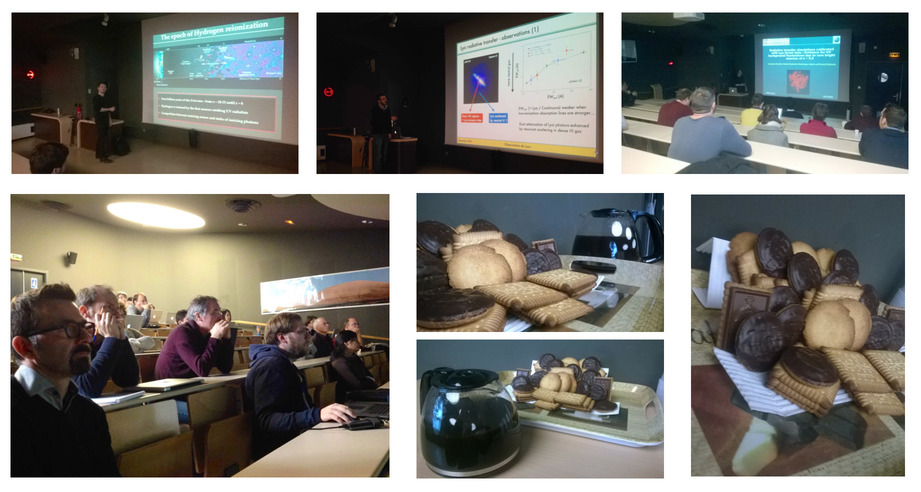
Nous vous conseillons d’arriver à l’observatoire à 10 : 30am le jour de votre séminaire afin de pouvoir vous installer, prendre le café et parler avec le personnel de l’observatoire.
Environ 50 minutes de matériel est idéal pour la durée de votre présentation, nous visons une durée totale d’une heure avec les questions.
Votre audience sera composée de membres des différentes équipes de recherche (du planétaire à la cosmologie), mais aussi d’ingénieurs.
Le niveau de l’audience ira de l’étudiant en master, doctorant, post-doctorant au chercheur permanent.
La langue de prédilection est l’anglais.
Séminaires
Les séminaires ont lieu le vendredi matin à 11h en salle de conférence au CRAL sur le site Charles André, le site historique de l’Observatoire de Lyon. Nous couvrons une large gamme de sujets en Astronomie et Astrophysique, et nous accueillons des orateurs français ou européens.
Les responsables des séminaires au CRAL sont Joakim Rosdahl, Benoit Commercon, and Ferreol Soulez.
- Proposer un orateur
Si vous êtes un chercheur et que vous souhaitez participer à ces séminaires, ou si vous souhaitez proposer un orateur, merci d'envoyer un mail à "seminars.cral at univ-lyon1.fr"
Pour les Orateurs
Nous vous conseillons d’arriver à l’observatoire à 10 : 30am le jour de votre séminaire afin de pouvoir vous installer, prendre le café et parler avec le personnel de l’observatoire.
Environ 50 minutes de matériel est idéal pour la durée de votre présentation, nous visons une durée totale d’une heure avec les questions.
Votre audience sera composée de membres des différentes équipes de recherche (du planétaire à la cosmologie), mais aussi d’ingénieurs.
Le niveau de l’audience ira de l’étudiant en master, doctorant, post-doctorant au chercheur permanent.
La langue de prédilection est l’anglais.
Seminaire François Rincon (IRAP – Toulouse)

Seminaire Olivier Ilbert (LAM, Aix-Marseille University)
Seminaire Kengo Tomida
Seminaire Ruediger Pakmor (MPA Garching)
Seminaire Katia Ferrière (IRAP)
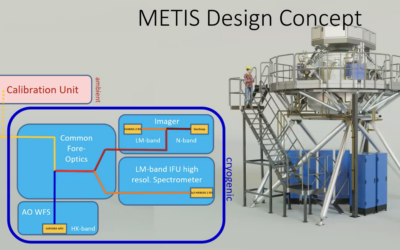
Seminaire Markus Feldt – (MPIA, Heidelberg)
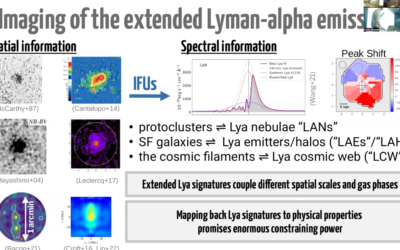
Seminaire Chris Byrohl (KIPAC, Stanford University)
Seminaire Karine Perraut (IPAG)
Seminaire Faustine Cantalloube & Julien Milli (IPAG)
Seminaire Mathias Nowak – (LIRA, Paris)
Results and perspectives from the ExoGRAVITY Large Programme Abstract: The direct detection of a giant exoplanet using long-baseline interferometry in 2019 marked the debut of the GRAVITY instrument in exoplanet research. This breakthrough was followed by the detailed...
Seminaire Adnan Ali-Ahmad (CRAL – AstroENS)
Simulating a gravitational collapse to stellar densities Abstract : Stars form as a result of the collapse of gravitationally unstable molecular cloud cores. This process, despite having occurred countless times in the Universe, remains poorly understood because of...
Seminaire Seok-Jun Chang (MPIA Garching)
Probing Cold Gas aroundGalaxies through the Mg IIResonance Doublet Abstract : The structure and kinematics of the gas around and in galaxies are crucial forunderstanding the multiphase flows within the galactic ecosystem and, thus, galaxyevolution and star formation....
Seminaire Henrik Beuther (MPIA Heidelberg)
Dynamical accretion flows and magneticfield in high-mass star formation Abstract : How much do different physical processes in the interstellar medium -- inparticular dynamics, magnetic field and density structure -- influence the formation ofmassive stars? I will...
Seminar Jenny Wagner (University of Helsinki)
From cosmic lasagna to space-time spaghetti - obtaining theleast-model-dependent stronggravitational lensing probe Abstract: Strong gravitational lensing has advanced as a standard probe to map massdensities of cosmic structures or to try and infer parameters of the...
Seminar Clément Bonnerot: Unleashing the predictive power of tidal disruption events
Unleashing the predictive powerof tidal disruption events The tidal force from a supermassive black hole can disrupt a star passing too close, resulting in a powerful electromagnetic flare as the stellar debris fuels the compact object. Such tidal disruption events...
Séminaire Valentin Le Gouellec
Evolution of embedded protostars studied with submillimeter and near-infrared observationsSun-like stars are thought to accrete most of their final mass during the protostellar phase, where the protostellar embryo is surrounded by an infalling dense envelope.I will...
Séminaire Rahna Payyasseri Thanduparackal
Mapping Extended Circumgalactic LyαNebulae Around Quasars With J-PAS Speaker : Rahna Payyasseri ThanduparackalCentro de Estudios de Física del Cosmosde Aragón (CEFCA, Teruel, Spain) Abstract : Circum-Galactic Medium (CGM) is the gas surrounding galaxies...
Séminaire Pierre Ocvirk Observatoire de Strasbourg
Towards simulating the Epoch of Reionization on exascalesupercomputers Speaker : Pierre Ocvirk Abstract : The Epoch of Reionization (EoR) represents a fundamental phasetransition in cosmic history, demanding sophisticated numerical simulationsto interpret...
Séminaire Rémi Giroud – Johan Richard
BlueMUSE — Le développement d’un spectrographe à champ intégral, duconcept au design Speaker : Rémi Giroud - Johan Richard Abstract : BlueMUSE est un spectrographe à champ intégral pour le Very LargeTelescope de l’ESO. Avec un champ de vue de 1 arcmin² et...
Séminaire Louis Quilley CRAL, GALPAC
Galaxy morphology: how the growth of their bulgeshapes the evolution of galaxies Speaker : Louis Quilley Abstract : Almost a century after the publication of the Hubble sequence (Hubble1926), that classifies galaxies according to their shapes and features,galaxy...
Séminaire Dorottya Szécsi (Nicolaus Copernicus University, Toruń)
The story of a dwarfgalaxy: I Zwicky 18and what I learnedin the past 12 years Speaker : Dorottya Szécsi Abstract : The metal-poor, irregular dwarf galaxy called I Zwicky 18 has been one ofmy constant obsessions during my scientific career. The galaxy emits...
Séminaire Dr Philipp Girichidis Universität Heidelberg
Cosmic rays in the interstellar medium Cosmic rays (CRs) are high energy particles with with an energy density comparable to the other energy densities in the interstellar medium (ISM) and very distinct cooling and transport processes. The low cooling efficiency of...
Séminaire Prof. Joop Schaye University of Leiden
The interplay between galaxy formation and cosmology Speaker : Joop Schaye Abstract : Observational surveys of the distribution of matter in the universe arebecoming ever more precise and continue to be extended to smallerscales. This necessitates accounting for...
Séminaire Michele Fumagalli University of Milano Bicocca
The gas environment of galaxies across 10 billion years Speaker : Michele Fumagalli Abstract : The evolution of galaxies is closely connected to the gas environment inwhich galaxies reside. Traditionally, this tenuous gas that cycles in and outof galaxies has...
Séminaire Lucie Leboulleux (IPAG, Grenoble)
Performance and robustness for futureexoplanet imagers Speaker : Lucie Leboulleux Abstract : The next objective in exoplanet direct imaging is to study dozens of rockyexoplanets orbiting M-type to solar-type stars (F/G/K), in order to buildtheories about their...
Séminaire Nicolas Laporte – Laboratoire d’Astrophysique de Marseille (LAM)
Beyond the Hubble Frontier: How JWST is Shaping OurUnderstanding of the Early Universe ? Speaker : Nicolas Laporte Abstract : The launch of the James Webb Space Telescope (JWST) in late 2021 hasmarked the beginning of a new era in extragalactic science, opening...
Séminaire Guillaume Bourdarot
First results and expanding horizons Speaker : Guillaume Bourdarot
Séminaire Valentina D’Odorico INAF – Osservatorio Astronomico
Understanding metal enrichment in the earlyUniverse through quasar spectroscopy Speaker : Valentina D’Odorico Abstract : Chemical elements heavier than helium – commonly referred to as “metals”in astrophysics – are synthesized by stars and distributed in...
Séminaire Joe Lewis Institut Astrophysique de Paris
Understanding the first galaxies Speaker : Séminaire Joe Lewis Institut Astrophysique de Paris Abstract : The James Webb Space Telescope has ushered in a new era for the studyof the first galaxies. However, large gaps persist in our knowledge. Indeedthe most...
Séminaire Nathan Hara (LAM, Marseille)
Detecting Earth-analogs with radialvelocities and photometry Speaker : Nathan Hara (LAM, Marseille) Abstract : Understanding how planets form and searching for life beyond Earth aretwo key goals in exoplanet research. To make progress on both fronts, it iscrucial...
Séminaire Armand Leclerc (ENS Lyon)
New tools from wave topology for asteroseismology Speaker : Armand Leclerc (ENS Lyon) Abstract : Asteroseismology studies waves in stars and uses them to infer what their internal structure is. Today, hundreds of stars of every kind show oscillations which...
Séminaire Antoine Rocher EPFL, Switzerland
Galaxy-halo connection in cosmology with wide spectroscopicsurveys Speaker : Antoine Rocher EPFL, Switzerland Abstract : Since the early 2000s, wide spectroscopic surveys, in particular multi-fibreexperiments, have provided significant insights into the...
Séminaire Ugo Lebreuilly (CEA Saclay)
Dust evolution from star forming environments to protoplanetary disks Abstract : Dust is a key component of the ISM. It plays a major role in radiative transfer processes, the interplay between the neutral gas and the magnetic fields, the chemistry and, of...
Séminaire John Chisholm The University of Texas at Austin
JWST’s GLIMPSE: A view of the faintest galaxies in the first billionyears of cosmic time Speaker : John Chisholm The University of Texas at Austin Abstract : Faint high-redshift galaxies in the early universe constrain the properties ofdark matter, the early...
Seminar @Obs by Laurent Mugnier (ONERA)
Exploring the cosmic reionization and galaxy growth with AstroSat Friday 22 October 2024 Title : Focal-plane wavefront sensing and applications: from Earth observation to astronomical imaging, laser focusing and exoplanet detection Speaker : Laurent Mugnier (ONERA)...
Séminaire Kanak Saha (IUCAA, India)
Exploring the cosmic reionization and galaxy growth with AstroSat Friday 15 October 2024 Title : Exploring the cosmic reionization and galaxy growth with AstroSat Speaker : Kanak Saha (IUCAA, India) Abstract : The ultraviolet Imaging Telescope on...
Séminaire Maximilien Franco (UT Austin/ CEA Saclay)
Brightest Galaxies During the Epoch of Reionization in COSMOS-Web Friday 11 October 2024 Title : Brightest Galaxies During the Epoch of Reionization in COSMOS-Web Speaker : Maximilien Franco (UT Austin/ CEA Saclay) Abstract : The COSMOS-Web survey...
Séminaire Timothée David-Cléris (CRAL)
PhD defence : Formation planétaire numérique sur architecture exascale Tuesday 24 September 2024 — PhD defence Title : Formation planétaire numérique sur architecture exascale Speaker : Timothée David-Cléris (CRAL) Abstract : Les simulations numériques sont...
Séminaire Ivanna Langan (CRAL)
PhD defence : Multi-Wavelength Studies of the Baryon Cycle of Star-Forming Galaxies Monday 9 September 2024 — PhD defence Title : Multi-Wavelength Studies of the Baryon Cycle of Star-Forming Galaxies Speaker : Ivanna Langan (CRAL) Abstract : One of the key...